E · EQUITY
“I do all the work. Why are we taking the same money?”
When ownership, pay and effort don’t line up, money becomes personal. Here is how families in Trinidad and Tobago and across the Caribbean agree fair pay in a family business without falling out.
Confidential. Nothing is shared with other family members without your permission.
Does this sound like your family?
It usually starts quietly. One family member runs the business day to day. Others hold the same shares and draw the same money. Nobody says anything, until every conversation about money turns into an argument about who does what.
It gets harder when there is no will, or when the parents want to treat the children equally but the children have very different roles in the business.
You might also be saying:
- “There’s no will, or it’s years out of date.”
- “My children want different things. How do I make this fair?”
- “The in-laws are asking questions about the shares.”
What it’s costing you
- The family member doing the work disengages, or leaves.
- Drawings and dividends become a running dispute instead of a policy.
- Money that should go back into the business goes into keeping the peace.
- If a founder dies without a will, the question of who gets what can end up in court.
What would help
- Separate ownership from work. Owners earn a return on their shares; family members who work are paid for their roles, like anyone else.
- Write down the policy for pay, drawings and dividends, so it is not renegotiated at every family lunch.
- Make the will and the shareholder agreement say the same thing, so ownership passes the way you intend.
- Agree what “fair” means out loud. Fair does not always mean equal, but it has to be understood.
What families say
Our dad died unexpectedly, and I was the only child that worked in the business with him. With Mankee Advisory, we were able to outline our roles and responsibilities, and develop a workable exit strategy, as well as a communication, succession and governance structure that everyone was able to get on board with.
Second-generation family business
Questions about fair pay in a family business
Should every child get an equal share of the family business?
Not necessarily. Equal is simple, but it is not always fair, especially when one child works in the business and the others don’t. The right answer depends on your family, and it should be agreed out loud and written down.
How should family members who work in the business be paid?
Like anyone else in that role: a salary that reflects the job they actually do. Returns on ownership, such as dividends, are then shared according to shareholding. Keeping the two apart removes much of the resentment.
What happens to the business if there is no will?
The founder’s share passes under the intestacy rules rather than their wishes, and someone has to be appointed to administer the estate before anyone can clearly act for it. A will and a shareholder agreement that work together avoid that gap.
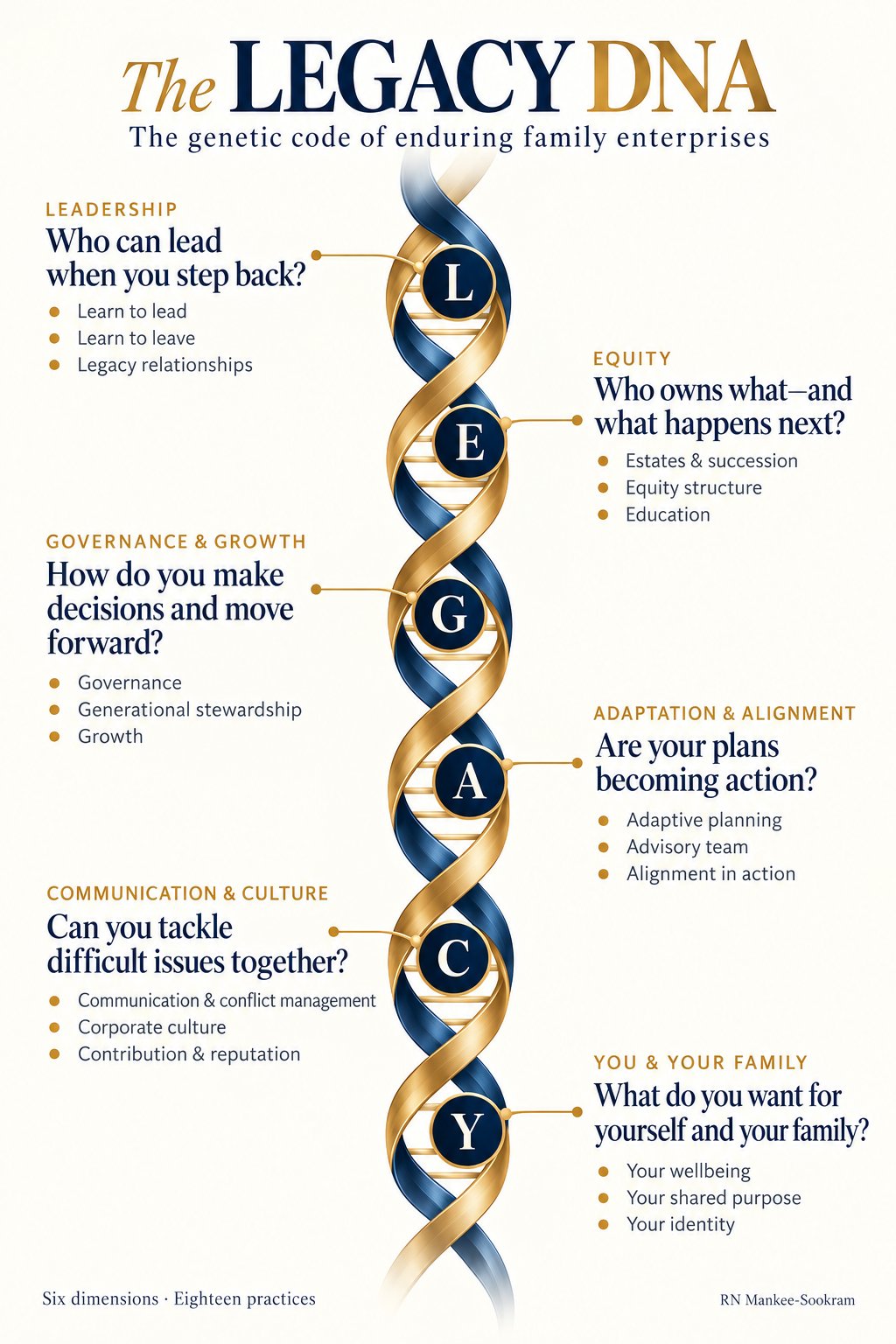
Where this fits in the LEGACY DNA
Fair pay in a family business sits under E · Equity in the LEGACY DNA: who owns what, and what happens next. The free Legacy DNA check shows where your family business stands on it, alongside the other five dimensions.
I cover this in more depth in my book, The Seven Domains of the Family Business.
What happens next
- Take the free Legacy DNA check. About 10 minutes, with an instant read on where your family business stands.
- Have a confidential conversation. We talk through what’s really going on. You’ll know the fee before any paid work begins.
- Get your plan. The full Legacy DNA Diagnostic, then the documents and structures it points to.
Confidential. Nothing is shared with other family members without your permission.